
Maximizing stun gun battery life requires avoiding extreme temps, maintaining charge levels between 20% and 80%, proper storage, regular cycling, and cleaning to prevent debris. Avoid overcharging, use recommended chargers, and store away from heat. Understanding battery care is key for reliability and legal compliance; learn best practices for how to maintain stun gun battery life.
“Uncover the ultimate self-defense tool in our comprehensive comparison of handheld electrical devices. From stun guns to personal defense devices, explore the key factors that matter. Learn about different battery types and how to maximize their lifespan with effective charging techniques. Understand the impact of design features on power, range, and accuracy. Additionally, we’ll navigate legal considerations and highlight safety aspects crucial for informed choices. Discover tips on maintaining optimal stun gun battery life for peace of mind.”
- Stun Gun Battery Types and Lifespan
- Charging Techniques for Optimal Duration
- Factors Affecting Power and Performance
- Range and Accuracy Comparison
- Legal Considerations and Regulations
- Safety Features and User Experience
Stun Gun Battery Types and Lifespan
Stun guns, like any other electrical device, rely on batteries for their operation. Understanding the types of batteries used and how to maintain their lifespan is crucial for optimal performance. The most common battery types in stun guns are lithium-ion (Li-ion) and nickel-metal hydride (NiMH). Lithium-ion batteries offer longer lifespans and faster charging times, making them a popular choice among users. NiMH batteries, while less common now, still see use due to their lower cost and environmental friendliness.
To prolong stun gun battery life, it’s essential to follow best practices such as avoiding extreme temperatures, keeping the device charged between 20% and 80%, and storing it properly when not in use. Regular cycling of the battery—using it for a few discharges followed by a full charge—can also extend its lifespan. Additionally, proper maintenance, including cleaning the device and ensuring no debris blocks contacts, is vital to maintain optimal battery performance.
Charging Techniques for Optimal Duration
Maintaining optimal battery life in your handheld electrical self-defense weapon, such as a stun gun, is crucial for ensuring its effectiveness during emergencies. Understanding the charging techniques and practices can significantly extend the duration between charges. One key factor is to avoid overcharging. Most modern devices feature smart batteries that automatically shut off charging once the battery is full, but it’s still good practice to unplug the charger once the device indicates it’s charged.
Regular use of your stun gun will require more frequent recharging, so consistent care and attention to charging habits are essential. Using the correct charger recommended by the manufacturer, adhering to the specified charging time, and storing the device away from extreme temperatures can all contribute to prolonging battery life. How you maintain the battery between uses is just as important as the initial charging process, ensuring your stun gun is always ready when you need it.
Factors Affecting Power and Performance

The power and performance of handheld electrical self-defense weapons, such as stun guns, depend on several factors. Firstly, the voltage and current output of the device play a crucial role in delivering an effective shock. Higher voltage can cause more significant muscle paralysis, while higher current can increase the intensity of the shock without causing prolonged discomfort. Secondly, the design and quality of the electrodes influence how well the weapon makes contact with the target, ensuring optimal energy transfer.
Additionally, battery life is a critical consideration when it comes to maintaining your stun gun’s effectiveness. Proper usage and care can significantly extend the lifespan of the battery. Regular cleaning, avoiding extreme temperatures, and adhering to the manufacturer’s guidelines for charging routines are essential practices to ensure peak performance. Knowing how to maintain stun gun battery life directly impacts the reliability and availability of your self-defense tool when needed most.
Range and Accuracy Comparison
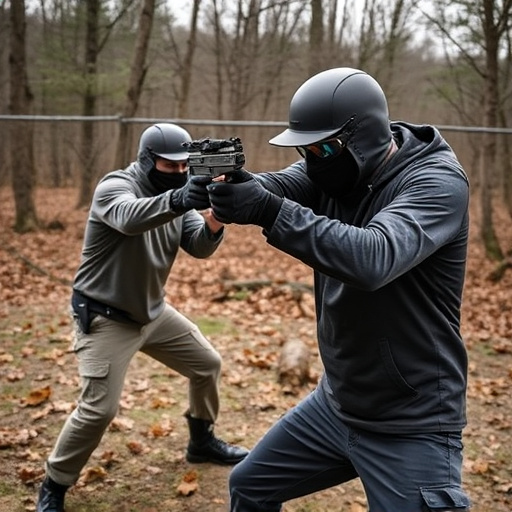
When comparing handheld electrical self-defense weapons, particularly stun guns, one critical factor is their range and accuracy. The effective range of these devices can vary significantly, with some manufacturers claiming distances up to 30 feet (9 meters). However, in practical tests, most stun guns perform optimally within a closer range, typically between 5 to 15 feet (1.5 to 4.5 meters). This proximity ensures users have enough time to aim and deploy the device effectively.
Accuracy also plays a vital role in ensuring the weapon’s effectiveness. Advanced models often feature laser sights or LED indicators for better targeting. Regular practice with these devices in controlled environments can significantly enhance a user’s ability to strike their intended target, making them reliable tools for self-defense scenarios. Additionally, understanding how to maintain stun gun battery life is essential; proper care ensures the device is always ready when needed.
Legal Considerations and Regulations
When considering a handheld electrical self-defense weapon, such as a stun gun or taser, understanding legal considerations and regulations is paramount. Each jurisdiction has its own set of laws governing the possession, use, and transport of these devices. It’s crucial to research and comply with local, state, and federal regulations. Unauthorized possession or misuse can result in severe penalties, including fines and imprisonment.
One common concern revolves around stun gun battery life and how it impacts device effectiveness and legal status. Maintaining proper battery care, including regular charging and storage, is essential not only for optimal performance but also to ensure the device remains compliant with legal requirements. Users should be aware of specific regulations regarding battery disposal and replacement to avoid legal pitfalls while ensuring the safety and reliability of their self-defense tool.
Safety Features and User Experience

When comparing handheld electrical self-defense weapons, safety features and user experience are paramount. Look for models with built-in safety mechanisms like safety switches that require a trigger pull to activate, ensuring accidental discharge is impossible. Additionally, consider devices with adjustable output levels; this allows users to choose the appropriate level of force based on the situation, enhancing both safety and effectiveness.
User experience includes not just ease of use during an emergency but also daily carry comfort and convenience. Consider weapons that offer ergonomic designs for a secure grip and comfortable carrying options like holsters or keychains. Maintenance is another crucial aspect; for instance, learning how to maintain stun gun battery life through regular charging and proper storage can significantly extend its operational lifespan, ensuring you’re always prepared when needed.
When comparing handheld electrical self-defense weapons, understanding the intricacies of their batteries is key. Optimizing your stun gun’s performance involves considering battery types, charging techniques, and lifespan—all vital factors for ensuring its effectiveness when you need it most. By managing power and performance through efficient charging habits and staying aware of legal regulations, users can maximize safety and reliability. Regularly maintaining your stun gun’s battery life is an essential step in being prepared for unexpected situations, allowing you to focus on personal security without the added worry.